
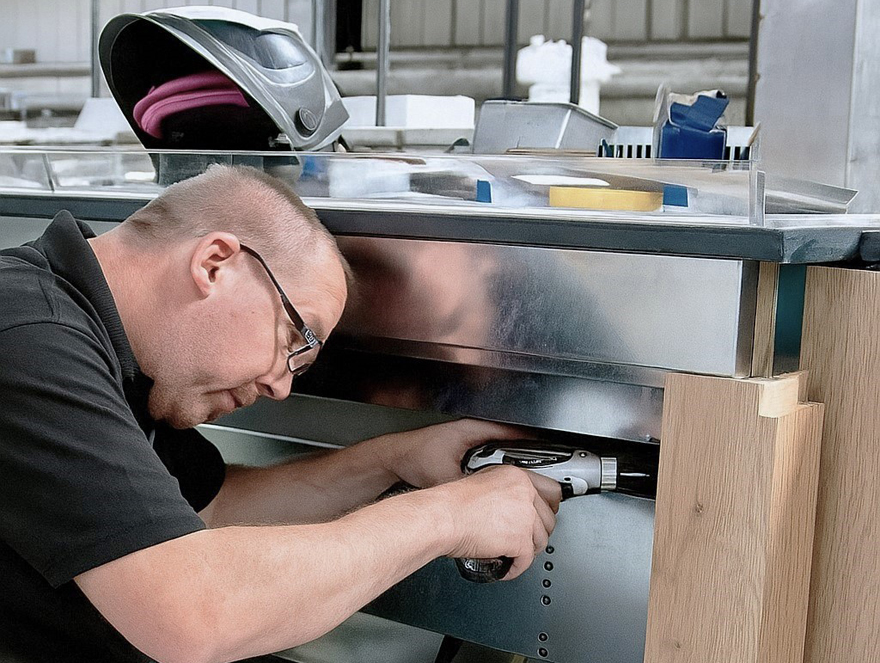
When you buy a business in distress, a little bit of patience is usually required. Instant fixes are rare and turnaround plans take time.
Space Group can certainly vouch for that even though more than 10 years have passed since it acquired the name and assets of Holmes Catering Equipment Solutions from administration.
The deal made perfect strategic sense on all levels at the time, handing Space access to its own manufacturing and fabrication facilities, while broadening its potential client base in terms of both sector and geography.
But it had to navigate some very choppy waters in those early years as it sought to revive a proud business that had fallen into financial difficulties.
“That first year or two was a tough time for the business,” recalls Space Group’s managing director Ian Bidmead. “Obviously it had gone into administration and had struggled – and we didn’t know a lot about manufacturing. It was a really difficult couple of years at the start.”
A decade on and the situation couldn’t be more different, with Bidmead describing the last 10 years as a “continuously improving picture”, bar the small matter of Covid, of course.
Today, the York-based outfit is a business in rude health with a very clear outlook on its market position and the ways it can deliver value. Most importantly, it sees plenty of headroom for growth ahead.
“Holmes has got a much broader customer base than it had back when we took it over,” continues Bidmead. “It makes good money. And it’s just a really good British manufacturing success story.
“I think when we bought it from the administrators it was down to 20-something people. Now we’re well over 50, so it’s a bigger business employing more people than it even did back in what would be regarded as its heyday in the early and late 2000s.
“It’s a bit of an industry secret in a way because it’s part of Space, and we’re part of Nisbets, and Nisbets is now part of Bunzl. It doesn’t get a lot of publicity in its own right as a standalone business, but it would probably be up there as one of the largest counter manufacturers and fabricators in the country, and long may that continue.”
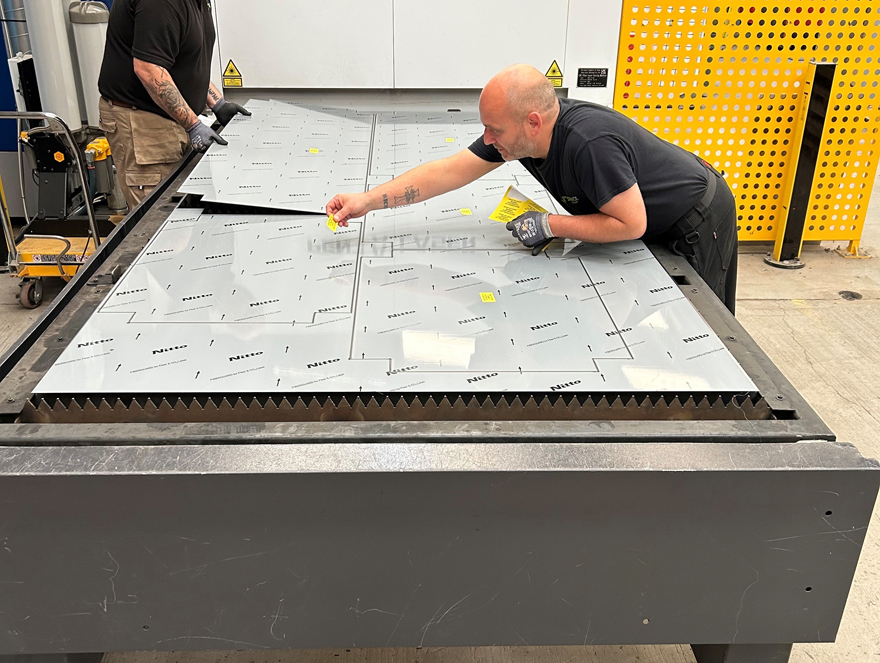
Prior to Space’s intervention, the idea of a significant capital investment at Holmes was the purchase of a piece of second-hand machinery for the factory.
Now it exudes the appearance of a more modern manufacturing operation courtesy of upgrades and enhancements across the plant. Carbon emissions have been lowered through initiatives such as switching to LED lights and electric vehicles, while solar panels will be installed on the roof this year.
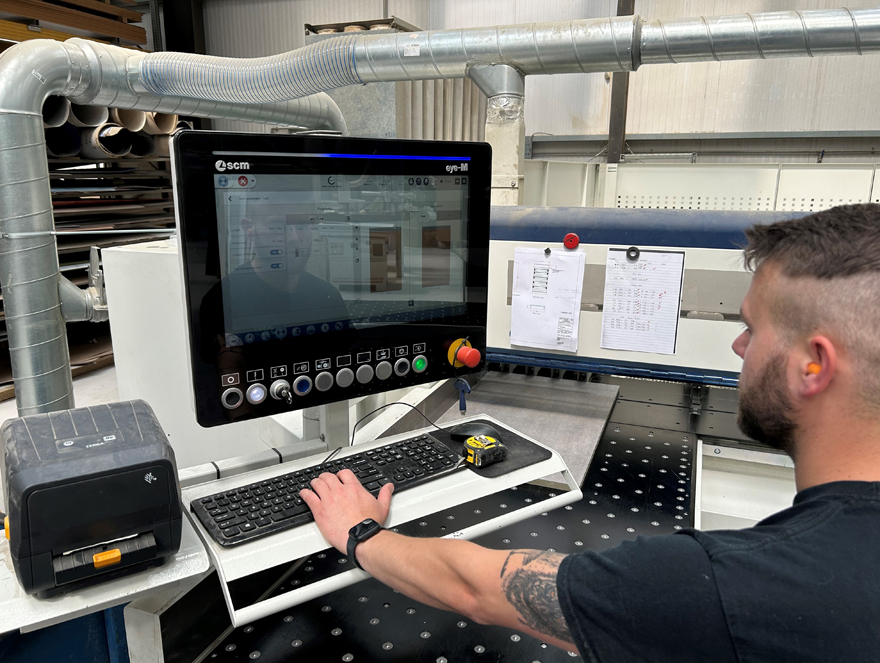
One man who has been there through the peaks and troughs is production manager Matt Taylor, a 23-year stalwart of the business. “Things are a lot more organised and structured, not just on the metalwork and fabrication side, but we’ve invested over the years in the joinery side as well; new edgebanders, beam saws, extraction systems and heated presses,” he says.
“We’ve got in-house spray booths so we can do all of our own finishing, which historically was a subcontractor process. If you took a snapshot of the building layout 10 years ago and compared it to where it is now, you’d see vast improvements in efficiencies and workflow.”
Investments have been made in personnel too, including in site engineers and in-house engineers, allowing Holmes to take on a broader spread of work and provide a competitive advantage that is now reaping rewards. There is a growing focus on apprentices, too – recognition that the future of the company depends on harnessing new blood.
“We’re investing heavily and bringing apprentices in on the electrical, fabrication and joinery side,” confirms Taylor. “We’ve currently got five apprentices that are working with us in various different trades. That’s a big focus for us – looking at the future and where we’re going to be in five years’ time and investing in having the skill set available.”
It is fair to say that Holmes has quite an interesting business model, courtesy of both its ownership and long-standing relationships in the market. It makes a standard range of products – about 25 varying sizes of sinks and benches – that are sold through the Nisbets channel, but its bread and butter is bespoke orders.
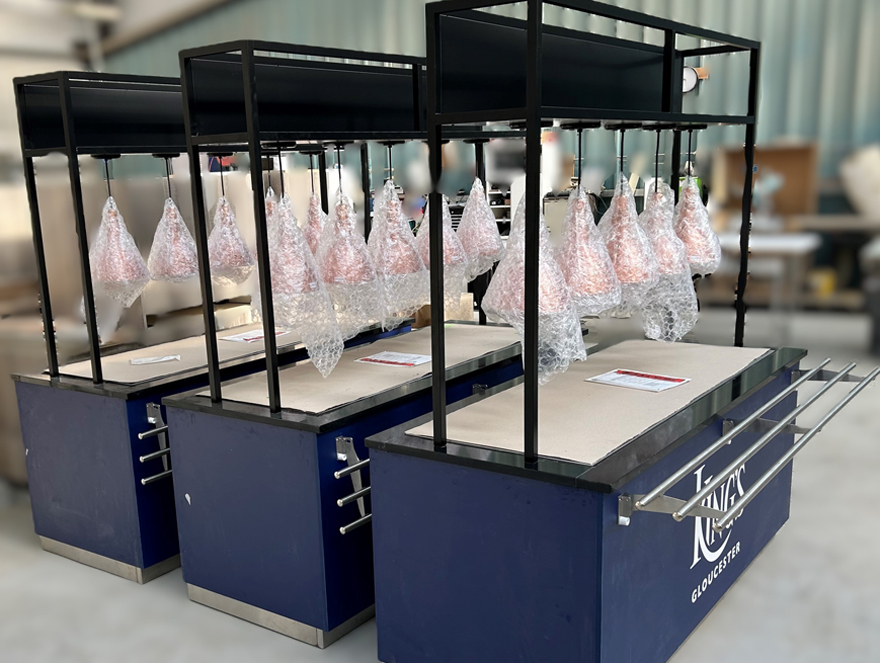
The company builds made-to-measure counters for a large number of direct customers in the supermarket and food-to-spaces, such as Tesco and Waitrose, while also servicing a growing network of trade customers. While these could be regarded from the outside as competitors to Space, Holmes operates independently from a P&L perspective and insists that any conflict is minimal.
With so much capability in-house, the company can easily flex and pivot to suit demand, whether it is a flurry of front-of-house counters that need to be manufactured for a grocery store or back-of-house fabrication for a dealer-led project.
Managing director, Steve Parkin, says that working with the catering equipment dealer trade is something it is keen to increase.
“That business has slowly but significantly increased over the years, along with the food retail side of the business,” he says. “I would like to think that the work we do with trade customers and design houses is built on reputation. It’s a fairly solid part of the business and we think there’s no reason why that can’t continue and grow in the future.”
While recruitment is one hurdle for the business, another issue that is consuming a significant portion of its time is sustainability. “The challenge is, where do you get the information from?” says Parkin.
“We’ve been capturing data for some time now, but just the sheer volume that some people require now is a challenge. Nisbets, in particular, has been capturing it so we’ve taken a lead from their position, while also working with leading customers such as Tesco that have been driving the sustainability aspect for quite a few years. It would be dangerous to say we’re ahead, but I certainly think we’re as up to speed as any other fabricator, for example.”
Taylor agrees that the appetite for sustainability information is only going to intensify among customers. “Quite a few customers are more focused on it now and keen to understand where the material comes from.
“We’re seeing more requests for sustainable worktops and recycled materials, and a desire from people to try and use different materials within the manufacturing of the countering. People are exploring real wood fronts or timber fronts and recycled worktop materials.”
Many of Holmes’ direct customers, particularly in the food retail field, regard it as something of an extension of their own businesses. In lots of cases you can’t even see the join between customer and supplier because it has served them for so many years.
“It’s a key account business and they’re very good at being able to create things. And that, I think, is fundamentally what Holmes will always be,” says Bidmead.
“It’ll never be a mass manufacturer of standard product. It will be bespoke, design-driven; a customer-focused, versatile supplier. And what we’re finding is that more and more customers appreciate that and want more of that – and that’s where its niche is in the market.”
Life may have been difficult at the beginning, but Space’s hunch that the business could thrive under the right ownership looks ever more astute with every day that passes.
